.avif)

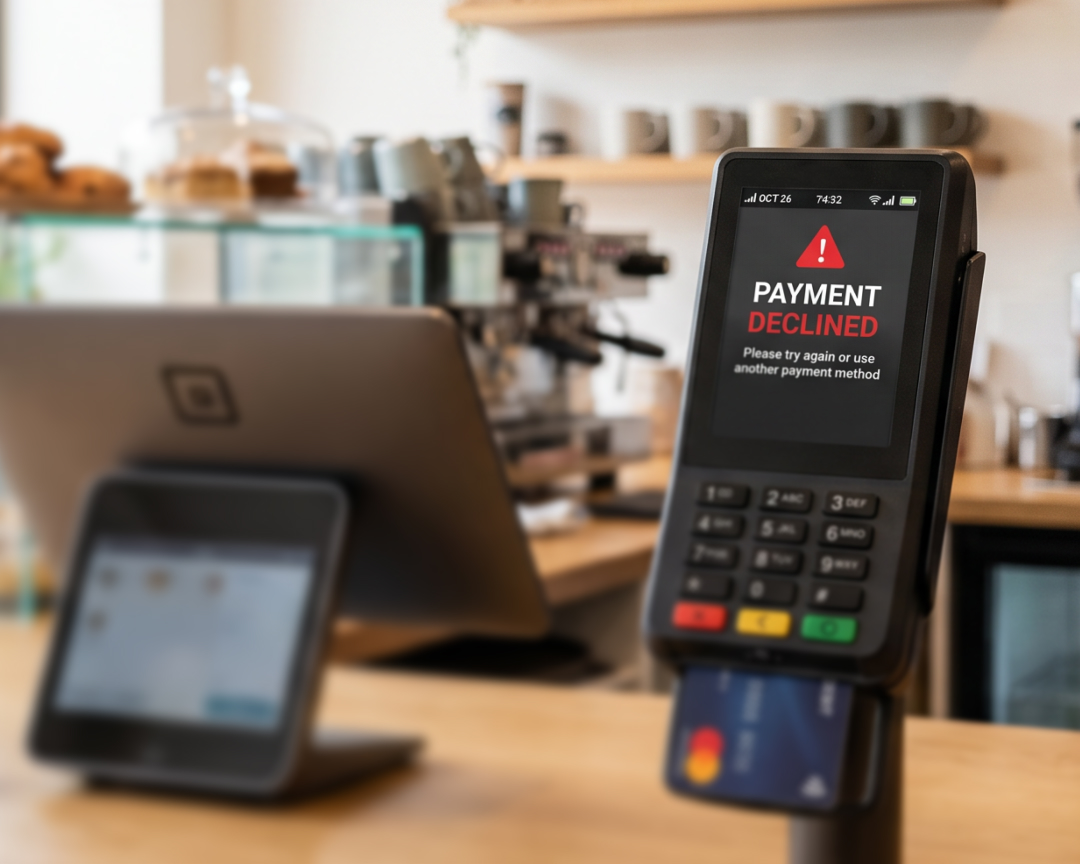
A “Do Not Honor” is a common (but not super helpful) decline code that can cause frustration for you and cardholders alike, when the bank has refused the charge and told you almost nothing about why. It is one of the codes merchants see quite often, and one of the easiest to mishandle, for instance when just retrying the card blindly can deepen the bank’s suspicion rather than recover the sales. The good news is that there are straightforward steps you can take to remedy the issue and ensure you receive the payment(s) you are due.
In this guide, we explore what the Do Not Honor decline code means in practice, how it affects merchant businesses, and how you can quickly remedy and reliably prevent the issue from recurring.
What Do Not Honor Decline Means
“Do Not Honor”, or code 05, is a generic decline code issued by a bank when it declines a transaction without a clear reason why. It can indicate a variety of underlying issues, meaning, unlike specific codes such as “Insufficient Funds” (code 51), merchants are left in the dark about why a transaction has failed.
In some cases, card issuers generate Do Not Honor as a simple catch-all message when the reason for decline is withheld from the merchant. For example, a bank may refuse payment and issue code 05 when a transaction triggers its risk engine—and it may not be able to categorize it.
Ultimately, this decline code stops merchants from seeing the specific reason for payment failure, with only the bank or issuer clear on what triggered it. It typically stays failed until either party in the transaction investigates.
Merchants can follow all regulatory security recommendations and a PCI compliance checklist and still experience these errors, meaning it is important to understand why they happen at all.
Common Causes of Do Not Honor Declines
Do Not Honor decline codes occur for a variety of underlying reasons. Here are some of the most common triggers:
- The customer may have exceeded a certain threshold or limit, such as how much they can spend per day.
- There may be insufficient funds in the customer’s account to clear the payment.
- Incorrect or invalid details may have been provided when checking out (e.g., a mistyped expiry date, long number, or CVV).
- The card used may not have been activated yet.
- The bank or issuer has applied a temporary hold on the card used.
- Card details stored for a regular merchant payment may no longer match issuer records.
Additionally, there are several reasons why a bank’s risk engine may assume a transaction is suspicious and therefore trigger code 05. The customer may have made a payment that is larger than usual, from a location considered unusual to the bank, or at a time outside of their typical activities.
Crucially, it is not a sign that e-commerce payment security has failed on the merchant’s side but the bank has decided to block a transaction without advising why.
Hard Declines, Soft Declines and Where Do Not Honor Sits
Do Not Honor codes are typically “soft declines”, meaning that transactions can be retried. However, some exceptions suggest merchants need to treat a code 05 as a “hard decline”, and that retrying is not appropriate.
Typical hard declines include stolen card use, indicated by suspicious activity. Given that merchants have no clear indication why a code 05 has taken place, it is important to follow guidance from your acquirer and/or gateway provider before trying to take a payment again.
There may be some clues to suggest whether or not a Do Not Honor is a soft or hard decline, and each case requires careful analysis and investigation. For instance, a code 05 on a first-time transaction, vs. a code 05 on a recurring payment that typically clears, will usually have different root causes and analysis needs.
Typical indicators that a code 05 is a hard decline include failed AVS (Address Verification Service) and CVV (Card Verification Value) checks. Merchants can combine these signals to measure caution before taking action.
Impact on Businesses and Customers
Do Not Honor decline codes negatively affect businesses and customers. The merchant, on one side, suffers from silent revenue loss, while on the other, frustrated customers potentially lose trust and take their business elsewhere.
Merchants taking payments via subscriptions, for example, may face churn involuntarily when code 05s go unnoticed by customers—bills simply continue to pile up unpaid.
Vague decline messages also leave customers making one-off payments feeling frustrated, causing them to abandon transactions altogether. It’s estimated that as much as 8% of US customers who abandon checkout do so because their cards were declined, and 15% because of online store errors.
A further impact of code 05s is that customers or merchants may continue retrying transactions, compounding issuer or bank suspicions that fraud is taking place.
Crucially, the differences between hard and soft declines (and the reasons for their triggering) result in different customer experiences. As a result, merchants must take measured and flexible steps to address code 05s, and avoid making assumptions.
Patterns and Trends in Do Not Honor Declines
Given that Do Not Honor decline rates vary by location, issuer, network, transaction type, and even seasonality, the most important data trends to consider are your own transactions.
We recommend analyzing decline patterns for specific banks, issuers, or regions. A BIN (Bank Identification Number) level analysis helps to identify if decline spikes are tied to specific card origins.
If there is a clear pattern of code 05s arising from Mastercard customers, or from Chase accounts, for example, there may be a systemic issue. In which case, it is important to consult with your processor and/or the affected issuer for further analysis.
How to Prevent Do Not Honor Declines
There are multiple ways to make upstream changes and reduce Do Not Honor decline rates from happening in the future.
We recommend the following preventive strategies:
- Ensure as much detail is captured/submitted as possible per transaction (i.e., use AVS matching, CVV authentication, and require a complete billing address). The more accurate information that is submitted, the less likely it will be that banks trigger code 05s.
- Use 3DS2 authentication as an additional layer of verification. Doing so provides cardholder banks with additional signals that transactions are legitimate, and reduces decline rates on qualifying payments.
- Carefully monitor for and report decline codes to identify potential patterns before they negatively impact revenue.
- Use network tokenization to anonymize PAN (Primary Account Number) data and ensure cardholder information is automatically updated. This prevents details going stale and reduces the risk of Do Not Honor codes.
- Network tokenization is highly recommended as part of PCI DSS for small businesses, - as it helps them stay compliant should they need to retain card information.
- Establish communication with buyers as soon as a code 05 emerges and encourage them to reach out to their banks for whitelisting and to retry payment.
How to Resolve Do Not Honor Declines
After receiving a Do Not Honor decline message, we recommend following these steps in order of priority:
- Attempt to take the payment once more, or encourage the buyer to try again, but only after checking that details are correct and that there are no known reasons for a card to be restricted. Many systematic, bank-side issues are resolved this way. If the problem persists, move to the next step.
- As mentioned above, we also recommend you seek advice from your gateway provider before retrying, especially if the code is unusual for a regular customer.
- Ask your customer to either reconfirm their details or to try an alternative payment method (e.g., another card or an e-wallet if acceptable). Ensure the customer still contacts their bank or issuer to prevent code 05s occurring elsewhere.
- In the event of a code 05 on a subscription payment, contact subscribers directly and outline the problem. Break down the potential causes for the issue, and ask them to retry and to report back. Keeping in contact with customers this way not only helps to resolve many code 05s, but also keeps buyers engaged enough to finish completing their orders.
- Regardless of how a code 05 occurs, make sure your post-decline messaging avoids mentioning fraud flags. Establish that it is a payment issue or a potential bank conflict, and provide a single, simple course of action for the buyer to take.
Common Questions and Misconceptions About Do Not Honor
Do Not Honor decline codes are common but can cause frustration and confusion for merchants and customers. Let’s close our guide by breaking down some of the most common misconceptions about this decline code with some FAQs.
Does “Do Not Honor” mean that a card is blocked?
No, a Do Not Honor decline message doesn’t always mean a card is completely blocked. The cardholder may still be able to make payments elsewhere. Merchants may ask cardholders to attempt a typical card payment with another retailer to see if the error repeats itself.
Does “Do Not Honor” indicate fraud?
No, Do Not Honor or code 05 errors don’t always indicate that fraud has taken place. Merchants and customers are only informed that a bank or issuer has refused the payment which covers a broad range of different triggers and scenarios. Therefore, a customer should consult their bank or issuer for advice if all details are present and correct.
Should I immediately try the transaction again?
No, you shouldn’t retry the transaction straight away, because this may raise further fraud flags at the bank or issuer side. While retrying transactions can resolve some system issues, customers should ideally check details with their merchant and approach their bank or issuer to ensure there are no blocks.
Is a Do Not Honor code the merchant’s fault?
No - the merchant receives this message, as does the customer, from the issuing bank. The decision to prevent a transaction with a code 05 relies entirely with the bank or issuer in the process. Therefore, they should be consulted if the issue persists.
Can a merchant help customers solve a Do Not Honor error?
Merchants are not responsible for code 05 errors and therefore cannot remedy the issue completely. The customer must contact their issuer or bank to resolve the issue and find out why the decline occurred. Merchants, however, can carefully guide customers toward their banks with open communication, potentially retaining a sale in the process. As part of retail PCI compliance, they can tokenize card data so it stays updated with bank information.
Sources
Brown, C. (2026, January 6). The Complete PCI DSS Compliance Checklist for Small Businesses. SecureTrust Blog. Retrieved May 28, 2026, from https://www.securetrust.com/blog/pci-dss-compliance-checklist
Hagdahl, J. (2025, June 30). Ecommerce Payment Security: Protect Every Transaction. SecureTrust Blog. Retrieved May 28, 2026, from https://www.securetrust.com/blog/e-commerce-balancing-speed-to-market-and-payment-security
Watty, F. (2025, November 25). Main reasons why consumers abandon their orders during the checkout process in the United States in 2025. Statista: E-Commerce: Digital Shopping Behaviour. Retrieved May 28, 2026, from https://www.statista.com/statistics/1228452/reasons-for-abandonments-during-checkout-united-states/
SecureTrust. (N.d.). PCI Compliance for Small Business. SecureTrust. Retrieved May 28, 2026, from https://www.securetrust.com/solutions/pci-compliance-for-small-business
SecureTrust. (N.d.). PCI Compliance for Small Retail Businesses. SecureTrust. Retrieved May 28, 2026, from https://www.securetrust.com/industries/retail
Senior Product Marketing Manager
SecureTrust

More Blogs
.jpg)